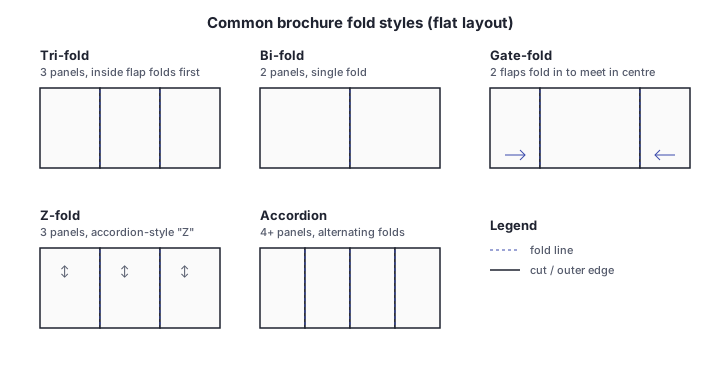
A brochure’s fold determines how content reveals itself. Five fold styles cover almost every business use case, and choosing between them is mostly a question of how much content you have and how you want the reader to encounter it.
Bi-fold
A single fold down the centre of the sheet produces four panels: front cover, inside-left, inside-right, back. It reads like a small magazine. The bi-fold is the most formal of the common folds — annual reports, real estate brochures, and high-end product overviews use it because the inside spread reads as one continuous canvas.
Use a bi-fold when content benefits from a wide, uninterrupted layout, when imagery is the lead, or when the brochure needs to feel substantial rather than scannable.
Tri-fold
Two folds divide the sheet into six panels — three per side. The right-hand panel folds in first, then the left folds over. Six panels of content with a clear front, back, and three internal sections in reading order.
The tri-fold is the default for services overviews, event programmes, and clinic or restaurant menus. It is the format readers know, which makes it easier to design around. For panel layout and content flow, see how to design a professional tri-fold brochure.
Z-fold
Same six panels as a tri-fold, but the folds alternate direction so the brochure opens like a concertina or map. The reader can see all three panels of one side at once when the fold is partially extended.
Z-folds suit content with a strong sequence — timelines, processes, step-by-step guides — because the reader can scan all panels in order without flipping the brochure over. They also work for maps and diagrams that span the full sheet width.
Gate-fold
The two outer panels fold inward to meet at the centre, forming a “gate” that opens to reveal a wide centre spread. Six panels in total, but the experience is built around the reveal: closing panels carry teaser content, the inside hides the main message.
Use a gate-fold for product launches, premium event invitations, and high-impact marketing pieces. The cost is higher per unit because of the more demanding cutting and folding, and the format does not scale well for routine print runs.
Accordion fold
Multiple parallel folds in alternating directions produce eight, ten, or twelve panels in a continuous concertina. The reader can extend the entire brochure flat or read panel by panel.
Accordion folds work for travel guides, multi-stage processes, and content that benefits from a long horizontal canvas. They are demanding to print at home — anything beyond eight panels is best handled by a commercial printer with proper folding equipment.
Choosing the right fold
Tri-fold for general business use. Bi-fold for premium feel and image-led content. Z-fold for sequential information. Gate-fold for high-impact marketing. Accordion for long content with a strong horizontal narrative.
For the broader question of whether a brochure is the right format at all, see brochure vs flyer: when to use which.